You Won’t Believe These 5 Theme Worlds Hiding in Mumbai
Mumbai isn’t just about bustling streets and Bollywood glamour—deep within its chaotic charm are unexpected theme areas that feel like stepping into another world. From colonial-era neighborhoods to coastal art districts, each zone tells a unique story. I explored these immersive pockets firsthand, and what I found was beyond imagination. This isn’t your typical tourist checklist—it’s a journey through identity, culture, and surprise. Let me take you where the city truly comes alive.
The Magic of Themed Urban Zones
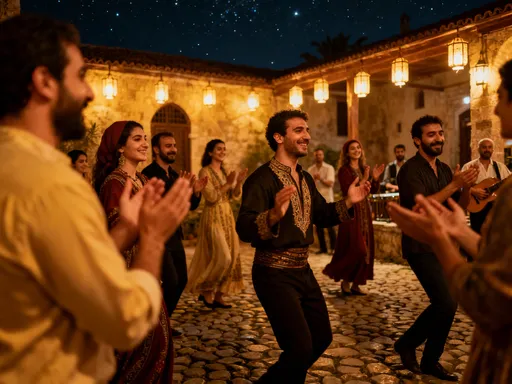
In a city as vast and layered as Mumbai, the idea of a “theme area” might seem unlikely. After all, how can order emerge from such vibrant disorder? Yet, beneath the surface of traffic, noise, and constant motion, distinct neighborhoods have evolved into immersive worlds—each with its own rhythm, aesthetic, and soul. These are not theme parks built for entertainment, but organic enclaves shaped by history, migration, economic activity, and community life. A theme area in Mumbai is defined not by gates or tickets, but by the sensory shift one feels when crossing an invisible threshold: the sudden hush near a Gothic cathedral, the burst of color on a mural-covered wall, the scent of spices rising from a centuries-old market.
What makes these zones so powerful is their authenticity. Unlike curated tourist attractions, they are lived-in, breathing spaces where daily life unfolds with pride and purpose. Walking from Colaba to Fort, for instance, is like turning the pages of a living history book—each street corner reveals another chapter of Mumbai’s layered past. Transitioning into Bandra feels like entering a creative laboratory where youth culture, art, and entrepreneurship collide. These shifts are not just geographical—they are emotional and psychological, offering travelers a deeper connection to the city’s spirit.
Experiencing these themed zones transforms a casual visit into a meaningful journey. It moves tourism beyond sightseeing into the realm of understanding. When you step into Dharavi’s pottery lanes or stroll along Marine Drive at dusk, you’re not just observing—you’re participating in a narrative. You begin to see how identity is built not in isolation, but through the interplay of architecture, economy, and human resilience. For the thoughtful traveler, especially those who value culture and connection, these pockets offer a rare opportunity: to witness urban life not as chaos, but as a carefully woven tapestry.
South Mumbai: Where Heritage Becomes a Living Exhibit
At the heart of Mumbai lies its historic spine—South Mumbai, a district where time seems to pause beneath the shadow of grand Victorian and Gothic buildings. This is where the city first took shape under British administration, and today, the legacy remains in stone, iron, and intricate carvings. The area stretching from Fort to Colaba, including the Oval Maidan and the Chhatrapati Shivaji Maharaj Terminus (CSMT), forms a UNESCO World Heritage site known as the Victorian Gothic and Art Deco Ensembles of Mumbai. It’s one of the few urban centers globally where such a concentration of 19th-century public architecture still functions as a living, working cityscape.
Walking through this zone is like stepping into a preserved era. The High Court’s red domes glow at sunrise, while the University of Mumbai’s Rajabai Tower casts long shadows over students hurrying to class. The CSMT, formerly Victoria Terminus, stands as a masterpiece of Gothic Revival design—its spires, turrets, and stained glass windows a testament to the ambition of a colonial capital. Yet, this is no museum frozen in time. These buildings are alive: government offices hum with activity, heritage cafes serve Irani chai beneath arched windows, and street vendors sell snacks just outside grand entrances.
What makes this area truly special is the harmony between preservation and progress. Heritage conservation efforts have ensured that restoration respects original craftsmanship, while adaptive reuse has given old structures new purposes. A former textile office might now house a design studio; a colonial bungalow could be a boutique hotel. Even the streets reflect this blend—the sound of honking scooters echoes against 150-year-old facades, and modern fashion boutiques sit beside century-old bookshops. For visitors, this creates a layered experience: the elegance of the past is not romanticized, but integrated into the pulse of contemporary Indian life.
Local life unfolds in quiet, meaningful ways. Elderly men play chess under banyan trees in Horniman Circle, office workers queue for vada pav near Flora Fountain, and schoolchildren in crisp uniforms walk past statues of long-forgotten governors. It’s in these everyday moments that South Mumbai reveals its soul—not as a relic, but as a neighborhood where history is not displayed behind glass, but lived on every corner.
Bandra: The Trendsetter Playground
If South Mumbai is the city’s heritage heart, Bandra is its creative pulse. Known as the “Queen of the Suburbs,” this western coastal neighborhood has evolved into Mumbai’s cultural laboratory—a place where art, fashion, music, and food converge in an ever-changing rhythm. Once a quiet Portuguese-influenced village, Bandra now thrives as a hub for artists, entrepreneurs, and free spirits. Its identity is not defined by grand architecture or ancient history, but by its energy, its openness to reinvention, and its celebration of individuality.
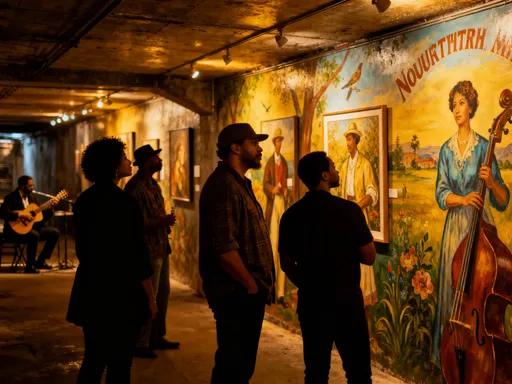
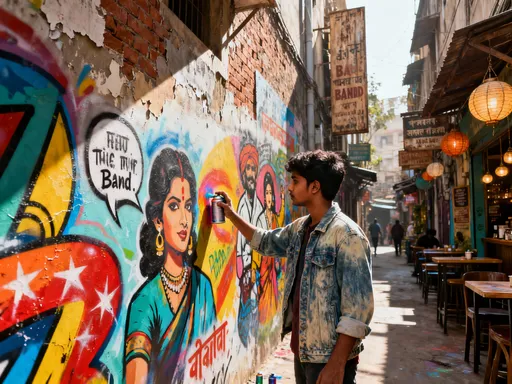
Nowhere is this more evident than on Chapel Road and Pali Hill, where street art has transformed narrow lanes into open-air galleries. Murals stretch across walls, depicting everything from mythological figures in modern settings to social commentary rendered in bold colors and surreal imagery. Local artists, often supported by community initiatives, use these spaces to express identity, protest injustice, or simply beautify forgotten corners. Walking through these alleys feels like browsing a living exhibition—one that changes with each visit.
Bandra’s café culture is equally transformative. Independent coffee shops with names like “The Little Door” or “Kala Ghoda Café” (though not to be confused with the South Mumbai district of the same name) dot the streets, each with its own aesthetic—rustic, minimalist, or vintage-chic. These spaces are more than places to drink coffee; they are community hubs where poets host readings, musicians play acoustic sets, and freelancers gather around laptops. The air hums with conversation, creativity, and possibility.
Boutique stores, thrift shops, and design studios add to the neighborhood’s bohemian charm. You can find handcrafted jewelry, upcycled clothing, or limited-edition prints in small storefronts tucked between residential buildings. The mix of local youth and creative professionals ensures that Bandra never feels stagnant—it’s a place in constant dialogue with itself, always redefining what it means to be modern and Indian at the same time. For visitors, especially those seeking authenticity beyond the mainstream, Bandra offers a refreshing contrast to Mumbai’s more formal districts.
Dharavi: The Unexpected Industrial Microcity
Often misunderstood and misrepresented, Dharavi is one of Mumbai’s most remarkable neighborhoods—not despite its density, but because of it. Far from being merely a “slum,” Dharavi functions as a self-sustaining microcity, a testament to human ingenuity and economic resilience. Spread across 2.1 square kilometers and home to an estimated 700,000 to one million people, Dharavi is a network of specialized lanes, each dedicated to a particular craft or industry. This functional zoning gives it the feel of a grassroots industrial park, where production happens at a human scale, in full view, and with remarkable efficiency.
Walking through Dharavi on a guided tour—ethically operated and community-respectful—reveals a world of specialization. In one lane, potters shape clay into traditional utensils using foot-powered wheels. In another, recyclers sort through tons of plastic, metal, and e-waste, transforming discarded materials into raw inputs for new products. Textile units hum with sewing machines, producing garments for local and international markets. Leather workshops craft bags and footwear, while food stalls serve fresh, steaming snacks made from locally sourced ingredients. The air is thick with the scent of spices, wet clay, and hot metal—a sensory map of economic activity.
What’s striking is the level of organization within apparent chaos. Despite narrow alleys and tightly packed structures, there is a clear division of labor and a strong sense of community ownership. Many businesses are family-run, passed down through generations, and deeply embedded in local networks. Dharavi’s informal economy is estimated to generate hundreds of millions of dollars annually, contributing significantly to Mumbai’s overall economic output. Yet, its value extends beyond numbers—it’s a living example of how communities can thrive without formal infrastructure, driven by skill, cooperation, and determination.
Visitors are reminded to approach with respect and humility. Photography is often restricted in private homes and workspaces, and interactions should be courteous and mindful. Ethical tours, led by local residents or trained guides, ensure that tourism supports the community rather than exploits it. These experiences don’t sensationalize poverty—they highlight enterprise, creativity, and resilience. For families and thoughtful travelers, Dharavi offers a powerful lesson: that dignity and innovation can flourish even in the most constrained environments.
Marine Drive & Navy Nagar: Coastal Contrasts
Along Mumbai’s western edge, the Arabian Sea curves into two strikingly different worlds: the public spectacle of Marine Drive and the quiet seclusion of Navy Nagar. Together, they illustrate the city’s ability to host both celebration and serenity within meters of each other. Marine Drive, also known as the Queen’s Necklace for its string of streetlights that glow like jewels at night, is one of Mumbai’s most iconic landmarks. A 3.6-kilometer promenade built on reclaimed land, it draws thousands every evening—families strolling, couples sitting on benches, children chasing kites, and street vendors selling bhel puri, ice cream, and roasted corn.
The backdrop is a sweeping arc of Art Deco buildings, a legacy of 1930s urban planning. These pastel-colored apartments, with their geometric balconies and ocean-facing terraces, form another UNESCO World Heritage site. At sunset, the sky turns gold and pink, reflecting off the sea and the curved facade of the buildings, creating a moment of collective awe. It’s a place of shared joy, where Mumbaikars of all backgrounds come to unwind, breathe, and simply be.
Just south of Marine Drive, however, lies a different kind of coastline—Navy Nagar. This gated enclave, home to Indian Navy personnel and their families, offers a rare sense of stillness in a bustling city. Access is restricted, requiring permission or a guided pass, but those who enter are rewarded with tree-lined avenues, colonial-era bungalows, and vintage naval architecture. The pace slows. Birds chirp. The sea breeze carries the scent of jasmine and salt. It’s a place where time feels preserved, where history and nature coexist in quiet harmony.
The contrast between these two zones is intentional and meaningful. Marine Drive represents Mumbai’s public face—vibrant, inclusive, and endlessly energetic. Navy Nagar reflects its private side—disciplined, protected, and contemplative. Together, they remind visitors that a city can hold opposites without contradiction. Whether you seek connection or solitude, celebration or silence, Mumbai offers both—often within walking distance of each other.
Chor Bazaar & Textile Hubs: Markets as Themed Worlds
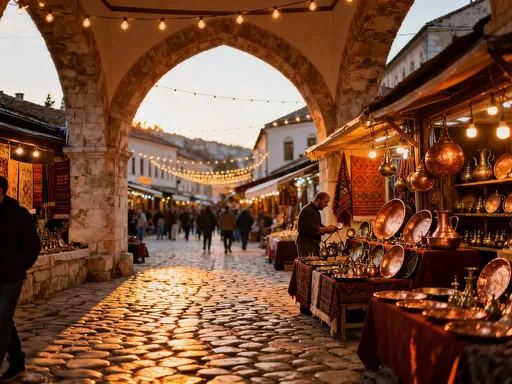
In Mumbai, markets are not just places to shop—they are immersive experiences, each with its own theme, rhythm, and sensory signature. Chief among them is Chor Bazaar, a name that translates to “Thieves’ Market,” though its modern incarnation is anything but criminal. Located in south-central Mumbai, this sprawling market is a treasure hunter’s paradise, filled with antiques, vintage furniture, retro electronics, and curiosities from another era. Walking through its maze of stalls feels like stepping into a retro-futuristic film set—old typewriters sit beside brass lamps, vintage motorcycles lean against walls, and stacks of vinyl records whisper forgotten melodies.
The name “Chor Bazaar” dates back to the British era, when it was said that stolen goods were sold here. Today, it’s a legitimate hub for collectors, decorators, and history enthusiasts. Many items are salvaged from old homes, ships, and colonial buildings, giving them a sense of provenance and story. Bargaining is expected, but it’s a dance of respect—vendors know their goods, and buyers appreciate the craft. The air is thick with the scent of wood polish, old leather, and dust—each breath a reminder of time’s passage.
Equally immersive are Mumbai’s textile hubs, particularly the lanes of Mohammad Ali Road and Bhendi Bazaar. These areas come alive during festive seasons, but their energy is constant year-round. Roll after roll of silk, cotton, brocade, and mirror-work fabric line the streets, creating a kaleidoscope of color. Dye vats bubble in the sun, and tailors work at foot-powered sewing machines, crafting garments by hand. The sound of scissors, haggling, and fabric unfurling creates a symphony of commerce and culture.
Shopping here is not transactional—it’s performative. Women in saris compare patterns, mothers bring daughters to choose wedding fabrics, and designers scout for unique textiles. The experience engages all senses: the feel of silk against skin, the smell of fresh dye, the sight of intricate embroidery. These markets are not just economic centers—they are cultural stages where tradition is worn, shared, and renewed. For visitors, they offer a rare chance to touch the living fabric of Indian life.
How to Navigate Mumbai’s Theme Areas Like a Local
Exploring Mumbai’s themed zones is rewarding, but doing so wisely ensures comfort, safety, and respect. The city’s climate—hot and humid for much of the year—means timing matters. Early mornings, between 7 and 10 a.m., are ideal for walking tours, especially in dense areas like Dharavi or Chor Bazaar. Late afternoons, around 4 to 6 p.m., work well for Marine Drive or Bandra, allowing you to catch the golden hour and evening promenade.
Transportation is key. The local train network is efficient and affordable, connecting South Mumbai to suburbs like Bandra and beyond. First-class compartments offer more space and are often preferred by women and families. Auto-rickshaws and app-based taxis (like Uber and Ola) provide door-to-door convenience, though traffic can slow travel during peak hours. For shorter distances, walking is the best way to absorb details—just wear comfortable shoes and carry water.
Safety is generally good in tourist-friendly areas, but vigilance is wise. Keep valuables secure, avoid flashing expensive electronics, and stay aware of surroundings, especially in crowded markets. Women travelers should dress modestly and may feel more comfortable in groups, particularly in less touristy zones.
Etiquette enhances the experience. Always ask permission before photographing people, especially in Dharavi or residential lanes. When bargaining in markets, do so with a smile—aggression has no place here. Respect religious sites by removing shoes and dressing appropriately. And above all, embrace the pace: Mumbai moves fast, but its soul reveals itself in moments of pause.
To make the most of your visit, consider thematic itineraries. An art trail could link Bandra’s murals with Kala Ghoda’s galleries in South Mumbai. A heritage walk might combine Fort, Oval Maidan, and CSMT. A market marathon could start at Chor Bazaar, continue to Crawford Market for spices, and end in Bhendi Bazaar for fabrics. Pacing is essential—limit yourself to two zones per day, with breaks for chai, snacks, and rest.
Mumbai’s Soul Lies in Its Themed Layers
Mumbai is not a city to be seen all at once. Its magic lies in its layers—each neighborhood a chapter, each street a sentence in a story still being written. The five theme worlds explored here—South Mumbai’s heritage, Bandra’s creativity, Dharavi’s industry, the coastal duality of Marine Drive and Navy Nagar, and the sensory richness of its markets—do not stand in isolation. Together, they form a mosaic of identity, resilience, and cultural fusion.
To travel through these zones is to move beyond the postcard image of Mumbai. It is to understand that a city’s greatness is not measured only in skyscrapers or landmarks, but in the quiet dignity of its people, the ingenuity of its communities, and the beauty of its everyday rituals. For the thoughtful traveler, especially those who value depth over spectacle, these experiences offer something rare: a chance to connect not just with a place, but with the spirit that animates it.
Mumbai does not reveal itself easily. It demands patience, openness, and a willingness to look beyond the surface. But for those who do, the reward is profound—a deeper understanding of urban life, and a renewed sense of wonder at what human communities can build, sustain, and celebrate. So step off the beaten path. Let the city’s themed worlds surprise you. Let them challenge your assumptions. And let them, ultimately, rewrite your idea of what travel can be.