You Gotta Taste This: How Noumea’s Festivals Turn Food Into Magic
If you think Pacific Island food is just coconut and fish, Noumea will blow your mind. This vibrant capital of New Caledonia doesn’t just serve meals—it turns dining into celebration. During festival season, the streets pulse with flavor: smoky grilled meats, fragrant tropical fruits, and dishes passed down for generations. I went not just to eat, but to experience culture through taste—and what I found was deeper, richer, and more alive than I ever expected.
The Heartbeat of Noumea: Where Food Meets Festival
Noumea is often celebrated for its turquoise lagoons and colonial architecture, but its true rhythm beats strongest in the communal spaces where food and festivity intertwine. Here, festivals are not merely events; they are expressions of identity, woven from the threads of Kanak tradition, French elegance, and Melanesian warmth. The city comes alive during cultural celebrations such as the annual *Koua Nga*, a vibrant showcase of indigenous art and cuisine, and the *Fête de la Musique*, where music spills into the streets and food becomes part of the performance. These gatherings are rooted in connection—between people, land, and ancestry—and food is their most eloquent language.
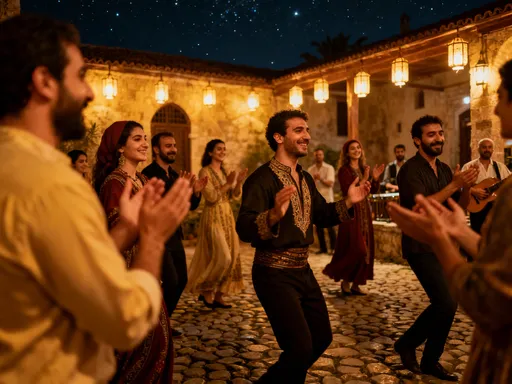
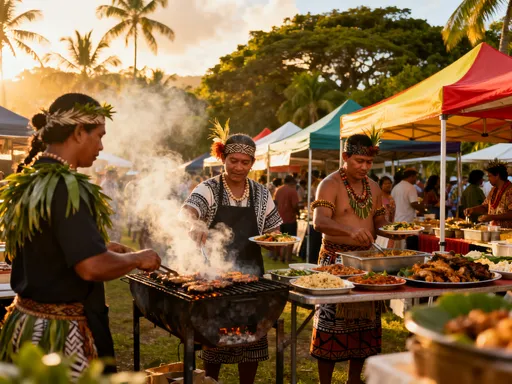
During these festivals, the Anse Vata waterfront transforms into a tapestry of open-air kitchens. Family-run stalls line the promenade, each one a testament to generations of culinary knowledge. The scent of wood smoke and roasting root vegetables mingles with the ocean breeze, while rhythmic drumming echoes from nearby performance stages. It’s not uncommon to see elders guiding children in the preparation of traditional dishes, their hands moving with practiced ease as they wrap banana leaves or stir coconut milk into stews. This is food as heritage, served not on fine china but on banana leaves, with laughter and song as the true accompaniment.
What sets Noumea apart is how seamlessly food integrates into every aspect of the festival experience. Unlike commercial food fairs elsewhere, where convenience often trumps authenticity, Noumea’s festivals prioritize tradition and storytelling. A plate of grilled fish isn’t just a meal—it’s a narrative of lagoon fishing techniques passed from father to son. A bowl of yam puree speaks of ancestral gardens and seasonal harvests. Visitors are not passive observers but invited participants, encouraged to taste, ask questions, and even try their hand at cooking. This inclusivity reflects a deep cultural value: that nourishment is meant to be shared, and celebration is incomplete without community.
Flavors That Define a Culture: Breaking Down Noumea’s Festival Cuisine
To understand Noumea’s festivals is to taste them. Each dish served during these celebrations carries layers of history, geography, and identity. At the heart of the culinary experience is *bougna*, a traditional Kanak meal that embodies the spirit of communal cooking. Prepared by layering chicken, fish, or pork with taro, yam, banana, and grated coconut in a woven basket, the ingredients are wrapped in banana leaves and slow-cooked in an earth oven heated with volcanic stones. The result is a rich, smoky stew infused with the essence of the land and sea. The process itself is a ritual—families gather hours in advance to prepare the pit, often accompanied by storytelling and song, reinforcing bonds across generations.
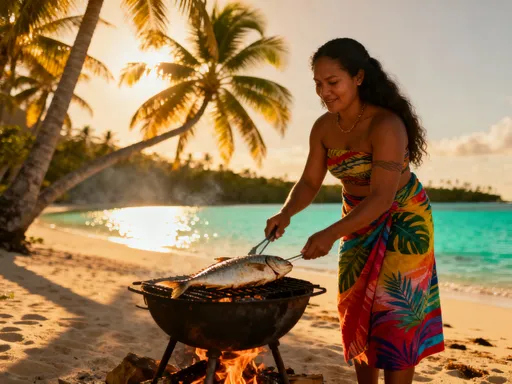
Equally iconic are the grilled tuna skewers that sizzle at nearly every festival stall. Sourced fresh from the surrounding lagoons, the tuna is marinated in lime, garlic, and local herbs before being charred over open flames. Served with a side of *rougail*, a spicy Creole relish made from tomatoes, onions, and chili, it reflects the island’s French-Caribbean influences. Another beloved staple is *fritures de taro*, crispy fritters made from grated yam or taro, lightly spiced and deep-fried until golden. These are often sold in paper cones by grandmothers who have perfected the recipe over decades, their stalls becoming landmarks in their own right.
What makes these dishes more than just food is their connection to the environment. Ingredients are overwhelmingly local: seafood pulled from the reef that morning, root vegetables harvested from family plots, fruits ripened under the tropical sun. This hyper-local sourcing is not a trend but a necessity, rooted in sustainability and respect for natural cycles. Even the cooking methods honor this principle—banana leaves replace plastic, earthen ovens use renewable wood, and leftovers are often fed to livestock or composted. In a world increasingly dominated by processed foods and disposable packaging, Noumea’s festival cuisine stands as a powerful reminder of how food can be both delicious and deeply responsible.
From Market to Mouth: Following the Festival Food Trail
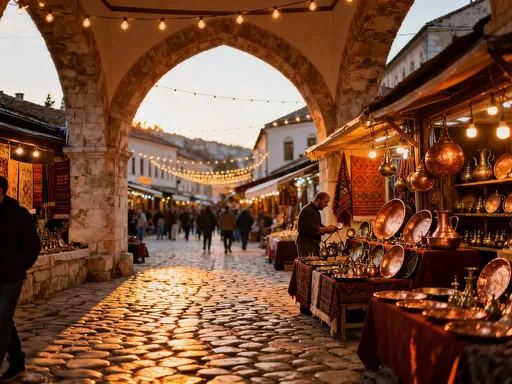
The journey of festival food begins long before the first bite. For visitors, the best way to experience Noumea’s culinary culture is to follow the food trail from market to festival grounds. Each morning during festival season, the Noumea Market—known locally as *Marché de Nouméa*—comes alive with vibrant displays of produce. Stalls overflow with ruby-red papayas, golden pineapples, spiky breadfruit, and leafy greens like *feuilles de chou cabus*, a local cabbage variety. Vendors, many of them women in brightly colored *mu’umu’us*, call out greetings as they arrange pyramids of taro and bundles of lemongrass.
By mid-morning, the ingredients begin their transformation. Families gather in communal kitchens or open-air pavilions to prepare for the day’s feast. The air fills with the sizzle of grills and the rhythmic thud of pestles pounding spices. It’s common to see young chefs working alongside elders, learning the precise balance of coconut milk and chili that defines a perfect *bougna*. Some stalls specialize in single dishes, perfected over years—like the famous octopus salad stall run by Madame Tepo, whose family has served it at festivals for three generations. Her secret? A dressing of lime, olive oil, and a hint of vanilla, all locally sourced.
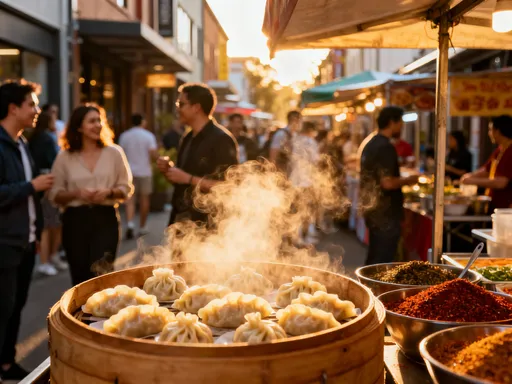
As the sun sets, the festival grounds become a sensory symphony. The flicker of firelight dances on smiling faces, and the aroma of grilled meat draws people in like a magnet. Visitors are encouraged to sample widely, moving from stall to stall with a small plate in hand. Many vendors offer tasting portions, allowing guests to explore without overcommitting. What’s striking is the warmth with which locals welcome curiosity. A simple “Can I try this?” often leads to an impromptu cooking lesson or a story about how a dish was first made after a successful harvest. This is not performative hospitality—it’s genuine sharing, rooted in pride and generosity.
Why Festival Food in Noumea Stands Out
In a region where Pacific Island nations share similar ingredients and climates, Noumea’s festival cuisine distinguishes itself through a rare fusion of technique, tradition, and intention. While other destinations may serve grilled fish or tropical fruit, few elevate the everyday meal to the level of cultural performance as consistently as Noumea. The French influence is evident not in fancy sauces or elaborate plating, but in the precision of preparation—think of the careful layering in a *bougna* or the balanced acidity in a well-made *rougail*. Yet, this refinement never overshadows the earthy authenticity of the dishes. Instead, it enhances them, creating a culinary experience that is both rustic and refined.
Another defining feature is the absence of waste. Unlike mass tourism hubs where plastic containers and single-use cutlery dominate, Noumea’s festivals operate on a principle of natural harmony. Banana leaves serve as plates, wooden skewers replace plastic, and water is often served in reusable glass bottles or coconut shells. This commitment to sustainability is not marketed as a trend but lived as a tradition. It reflects a worldview in which humans are not separate from nature but part of its cycle. When a child licks coconut milk from a banana leaf, it’s not just a meal—it’s a lesson in respect for the environment.
Equally important is the culture of sharing. Portions are often large, meant to be divided among friends or passed to a neighbor. It’s not unusual for a vendor to offer an extra piece of grilled breadfruit “for the road” or for a family to invite strangers to join their picnic mat. This generosity is not performative; it stems from a deep-seated belief that food strengthens relationships. In a world where dining is increasingly individualized—think takeout containers and solo meals—Noumea’s festival culture reclaims eating as a collective act of joy and belonging.
Planning Your Visit: Timing, Access, and Etiquette
For those eager to experience Noumea’s festival food culture firsthand, timing is key. The most vibrant culinary events occur between July and September, during *La Fête du Citron* and various cultural weeks that celebrate Kanak heritage. December and January also offer rich experiences, as year-end celebrations bring families together for large feasts and public gatherings. The *Koua Nga* festival, typically held in August, is particularly renowned for its food exhibitions, where visitors can sample dishes from across the archipelago.
Getting around Noumea during festival season is relatively straightforward. The city is compact, and most major events take place within walking distance of the city center or along the Anse Vata Bay. Public buses run regularly, and ride-sharing services are available for those venturing further afield. Festival sites are generally accessible, with shaded areas, seating, and clean restrooms. Many events are free to enter, though donations are appreciated and often go toward community projects.
Respectful participation is essential. While locals are welcoming, certain customs should be observed. Always ask before taking photographs of people or food stalls—some families consider their recipes sacred and may prefer privacy. When offered food, accept with both hands if possible and express gratitude verbally. It’s also customary to try a small portion of everything offered, as declining can be seen as a slight. Most importantly, approach the experience with humility. These festivals are not tourist attractions but living traditions, and visitors are guests in a long-standing cultural practice. By listening more than speaking and observing before acting, travelers can engage meaningfully without disrupting the authenticity of the event.
Beyond the Plate: How Food Festivals Strengthen Community
While visitors may come for the flavors, the true impact of Noumea’s food festivals lies in their role as pillars of community resilience. These events are not just about preserving recipes—they are about sustaining identity in a rapidly changing world. For many Kanak families, especially women, the festival season is a time of economic and cultural empowerment. Cooking collectives, often led by matriarchs, organize months in advance to source ingredients, prepare dishes, and manage stalls. The income generated supports household needs, funds children’s education, and helps maintain ancestral lands.
More subtly, the festivals serve as intergenerational classrooms. Young people who might otherwise drift away from traditional practices find purpose in learning to cook *bougna* or weave banana leaves. Schools sometimes partner with elders to offer culinary workshops during festival weeks, ensuring that knowledge is formally passed on. In this way, food becomes a bridge between past and future, helping youth connect with their roots in a tangible, joyful way.
The social fabric of Noumea is also reinforced through cooperation. Families who may live apart during the year reunite to prepare for festivals, rekindling bonds and sharing responsibilities. Neighbors trade ingredients—taro for fish, fruit for spices—strengthening local networks. Even the act of cleaning up after an event is communal, with volunteers gathering to return the space to its natural state. These practices reflect a worldview in which success is measured not by individual gain but by collective well-being. For visitors, witnessing this unity can be as nourishing as the food itself.
Tasting the Future: Can Noumea’s Food Culture Last?
Despite its vibrancy, Noumea’s culinary tradition faces real challenges. Climate change is altering rainfall patterns, affecting the yield of staple crops like taro and yam. Rising sea temperatures threaten coral reefs, which in turn impacts fish populations and the livelihoods of lagoon fishermen. At the same time, younger generations are increasingly drawn to urban jobs and globalized diets, sometimes viewing traditional cooking as labor-intensive or outdated. Tourism, while beneficial, can also place pressure on resources and risk turning sacred practices into commodified performances.
Yet, there is reason for hope. Local organizations and cultural leaders are actively working to preserve culinary heritage. Initiatives like the *Pôle d’Excellence du Goût* promote food education in schools, teaching children about native ingredients and sustainable cooking. Community gardens are being revived to ensure access to traditional crops, and fishing cooperatives are adopting eco-friendly practices to protect marine life. Some festivals now include workshops on food preservation, such as fermenting or drying, to help families adapt to changing conditions.
Travelers, too, have a role to play. By choosing to eat at family-run stalls, asking about the origins of dishes, and respecting cultural protocols, visitors become allies in preservation. A simple act—like thanking a cook by name or purchasing a handmade banana leaf basket—can affirm the value of tradition. Conscious tourism doesn’t require grand gestures; it begins with mindful choices. When visitors treat festival food not as entertainment but as a living culture, they help ensure its survival.
Noumea’s festival food scene is not just a treat for the palate—it’s a living archive of culture, connection, and resilience. To taste here is to participate in something ancient and evolving, humble and profound. The next time you plan a Pacific escape, don’t just look for scenery. Seek flavor. Seek story. Let your journey begin on a plate.