Urban Frames: Sapporo Through My Lens
You know that quiet magic when city light hits just right? In Sapporo, it’s everywhere—snow-dusted streets, glowing tram lines, quiet alleys humming with life. I went chasing moments, not landmarks, and found the soul of the city in its urban spaces. Photography here isn’t about perfect shots; it’s about feeling the rhythm. This is what happens when a winter city breathes through its architecture, people, and silence. The air carries a hush, even in motion, and every frame holds a pause—a breath held between snowfall and sunrise, between stillness and movement. Sapporo is not loud, not flashy, but it speaks in tones that settle deep, inviting those who listen to look closer, to slow down, and to see the poetry woven into its orderly streets and soft-lit corners.
First Light in Odori Park – Where Nature Meets the Grid
Odori Park is the city’s open lung, a long green ribbon slicing through Sapporo’s rigid grid. At dawn, especially in winter, it transforms into a stage for quiet beauty. Snow blankets the lawns and walkways, muffling sound and softening edges. The surrounding skyscrapers, still dark or faintly glowing, stand like sentinels around a sleeping garden. This contrast—between the wild softness of nature and the sharp geometry of urban design—is what draws photographers early, often before sunrise, to capture the park in its most intimate state.
Arriving before 7 a.m. during winter months ensures minimal foot traffic, allowing for clean compositions and unobstructed sightlines. The low angle of the morning sun casts long shadows across the snow, highlighting textures and adding depth to otherwise flat scenes. From the elevated walkways near Sapporo TV Tower, one can frame the park in sweeping horizontal lines, emphasizing its role as a central axis in the city’s layout. A wide-angle lens, such as a 24mm or 35mm, works best for capturing the full breadth of the space while keeping architectural elements in context.
But the magic isn’t limited to winter. In summer, Odori Park blooms with color—flower beds in full swing, festival tents rising for seasonal events like the Yosakoi Soran Festival. The greenery creates a visual counterpoint to the glass and steel around it, offering photographers a chance to explore contrasts in tone and temperature. Early morning light in June or July filters through the trees with a golden warmth, illuminating joggers, dog walkers, and street performers beginning their day. The key is timing: arriving before the crowds swell ensures authenticity and space to compose with intention.
For those seeking a different vantage, the underground passages connecting nearby subway stations offer elevated viewing platforms. These often-overlooked spots provide a bird’s-eye perspective without the need for drones or restricted access. Additionally, the interplay of artificial lighting from below and natural light above creates layered exposures, ideal for experimenting with long shutter speeds or HDR techniques. Whether blanketed in snow or bursting with summer life, Odori Park remains a living canvas—one that reflects both the order of urban planning and the unpredictability of nature.
Trams and Time – Capturing Motion in a Calm City
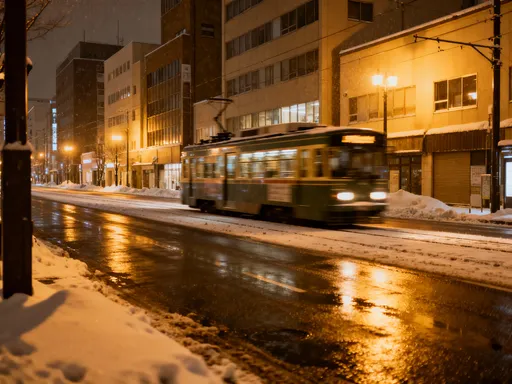
Sapporo’s streetcar system is a quiet constant in a city that otherwise moves with efficiency and reserve. The green and cream-colored trams glide along fixed routes, their bells ringing softly as they pass through neighborhoods both residential and commercial. Unlike the hurried subways or private vehicles, the trams move at a human pace, making them ideal subjects for urban photographers interested in motion, rhythm, and narrative. Their predictability allows for preparation, yet their interactions with pedestrians, weather, and light keep each shot unique.
One of the most compelling aspects of photographing Sapporo’s trams is the opportunity for long-exposure photography. Using a tripod or stabilizing the camera against a railing, photographers can set shutter speeds between 1/4 and 2 seconds to blur the movement of the tram while keeping its shape recognizable. This technique turns the vehicle into a streak of color against a static background, emphasizing its journey rather than its form. When done during twilight or under streetlights, the effect is heightened—glowing wheels, blurred windows, and light trails from passing cars create a dreamlike quality.
The intersection of Nishi 13-ji and Odori is a favorite among locals and visitors alike for tram photography. Here, the tracks cross directly in front of Odori Park, with the TV Tower rising in the background. The symmetry of the scene, combined with the convergence of horizontal and vertical lines, offers strong compositional structure. Shooting from a low angle enhances the sense of scale, while using a polarizing filter can reduce glare from wet pavement after snowmelt, improving contrast and color saturation.
For a more intimate feel, consider focusing on details: the reflection of the tram in a rain puddle, the silhouette of a passenger in a lit window, or the interaction between the tram and a pedestrian waiting to cross. These moments, though fleeting, carry emotional weight. They speak to daily life, routine, and the subtle connections between people and public infrastructure. The tram, in this context, becomes more than transportation—it becomes a symbol of continuity in a city that values both progress and preservation.
The Backstreets of Susukino – Not What You’d Expect
Susukino is often labeled as Sapporo’s entertainment district—a place of neon signs, izakayas, and late-night energy. But beyond the main avenues, tucked between buildings and behind delivery entrances, lie quieter passages that tell a different story. These backstreets, often overlooked by tourists, are rich with texture: peeling paint, rusted metal, hand-painted signs, and reflections in puddles after rain or snowmelt. Here, the city feels raw, honest, and deeply lived-in.
Photographing these alleys requires a shift in perspective. Instead of seeking grand vistas, one must look downward, sideways, and into shadows. A macro lens can reveal the intricate patterns of frost on a metal door, while a standard prime lens captures the interplay of light and shadow across narrow corridors. The absence of crowds during early evening or late morning allows for contemplative exploration. Fog, common in winter mornings, adds atmosphere, softening edges and creating a sense of mystery.
One particularly evocative spot is the alley running parallel to Minami 4-jo, where laundry lines stretch between buildings and steaming vents rise from basement kitchens. The warmth rising from below creates a natural diffusion effect, blurring the background and drawing attention to foreground elements. Reflections in puddles double the scene, offering symmetrical compositions that play with reality and illusion. These images, though seemingly simple, carry a quiet dignity—the dignity of everyday labor, of meals prepared, of lives unfolding behind closed doors.
When photographing in these areas, discretion is essential. While the scenes may appear uninhabited, many of these alleys serve as service routes for restaurants and shops. It is important to move respectfully, avoid blocking pathways, and refrain from photographing individuals without consent. In Japan, privacy is highly valued, and ethical photography means capturing the environment without intruding on personal space. A simple nod or smile when encountering a worker can go a long way in maintaining goodwill. The goal is not to document people, but to document the traces they leave behind—their marks on walls, the wear on steps, the glow of a kitchen light at dawn.
Architecture as Emotion – From the TV Tower to Modern Blocks
Sapporo’s skyline tells a story of resilience, innovation, and cultural identity. The Sapporo TV Tower, built in 1957, stands as a retro-futuristic icon—a slender steel lattice rising from the heart of Odori Park. Its design, inspired by the Eiffel Tower but scaled for a quieter city, evokes mid-century optimism. From a photographic standpoint, it serves as both subject and framing device. Shooting through its legs toward the park or surrounding buildings creates strong leading lines and geometric depth.
But the city’s architectural narrative extends far beyond this single structure. Postwar reconstruction shaped much of central Sapporo, resulting in a grid-based layout influenced by Western urban planning. This orderliness, while functional, could feel sterile—yet over time, the city has softened its edges with green spaces, pedestrian zones, and thoughtful design. The blend of old and new is particularly evident in districts like Tanukikoji Shopping Arcade, where 1960s-era covered walkways coexist with modern storefronts and digital signage.
Contemporary buildings, such as the Sapporo JR Tower and the Es Con Field complex, reflect current trends in sustainable design and mixed-use development. The reflective glass facades interact dynamically with weather conditions—on overcast days, they mirror the gray sky, creating a moody, monochromatic palette; on sunny mornings, they sparkle with sharp contrast. Photographers can use these surfaces to capture abstract reflections, turning the city into a living collage.
One of the most underrated aspects of Sapporo’s architecture is its relationship to light. Due to its northern latitude, the sun remains low in the sky for much of the year, especially in winter. This produces soft, diffused illumination that enhances textures and minimizes harsh shadows. Buildings appear more dimensional, their surfaces revealing subtle details that might be lost under direct sunlight. The grid layout further aids composition, allowing for strong horizontal and vertical lines that guide the eye through the frame. Whether shooting wide-angle cityscapes or tight details of window frames and signage, the city’s structure supports intentional, deliberate photography.
Golden Hour in Nakajima Park – The Urban Oasis Effect
Nakajima Park, located just west of central Sapporo, offers a different kind of urban rhythm. Nestled along the Toyohira River, it combines natural beauty with cultural landmarks, including the Hokkaido Shrine and a traditional tea house. Unlike Odori Park, which is defined by its symmetry and openness, Nakajima unfolds in curves and layers—winding paths, tree-lined canals, and quiet benches tucked beneath pines. This complexity makes it a rewarding subject for photographers seeking depth and mood.
The golden hour here—just after sunrise or before sunset—transforms the park into a space of quiet radiance. In winter, the snow-covered trees reflect the warm light, creating a glow that seems to emanate from within the landscape. The contrast between the cool blue shadows and the golden highlights adds emotional resonance to images. A polarizing filter can deepen the sky and reduce glare on icy surfaces, enhancing the sense of atmosphere.
Shooting near the pond offers opportunities for reflection photography. When the water is still, it mirrors the surrounding trees and sky, doubling the visual impact. Using a tripod allows for slower shutter speeds, capturing not just the reflection but the subtle ripples caused by wind or passing birds. A telephoto lens can compress the scene, bringing distant elements—such as the shrine gate or a cyclist on a far path—into closer relationship, creating layered narratives within a single frame.
Seasonal variation plays a major role in the park’s photographic potential. In autumn, the ginkgo and maple trees turn brilliant shades of red and gold, their colors reflected in the water. In spring, cherry blossoms line the walkways, drawing visitors but also offering fleeting beauty for those who arrive early. The key is timing and patience. Waiting for a person to walk through the frame at the right moment—a woman in a coat pausing to feed ducks, a child reaching for a kite—can turn a static landscape into a story. These human elements, though small, anchor the image in lived experience.
People and Public Spaces – Life in the Frame
No city feels alive without its people, and Sapporo is no exception. But photographing individuals in public spaces requires care, respect, and cultural awareness. In Japan, candid street photography is practiced with restraint. The goal is not to capture expressions or invade privacy, but to document the presence of life—the way a commuter adjusts their scarf, how a street vendor arranges fresh produce, or the way light falls on a bicycle parked outside a café.
These moments, though ordinary, carry narrative weight. A lone figure walking across Odori Park at dusk becomes a symbol of solitude and urban scale. A group of students laughing near a tram stop brings warmth to an otherwise cool cityscape. The challenge lies in capturing these instances without staging or intrusion. Using a longer lens—such as a 50mm or 85mm—allows for respectful distance while maintaining clarity. Shooting from the side or behind can preserve anonymity while still conveying emotion and movement.
Seasonal events offer natural opportunities for human-centered photography. During the Sapporo Snow Festival, for example, crowds gather around massive ice sculptures, their breath visible in the cold air. The combination of structured art and spontaneous reactions creates dynamic scenes. Children pressing their hands against translucent walls, couples pausing for photos, workers adjusting lighting—all of these moments unfold organically. The photographer’s role is to observe, wait, and recognize the decisive instant.
Equally important is knowing when not to photograph. Inside temples, private businesses, or residential areas, discretion is paramount. When in doubt, a polite gesture or brief verbal inquiry can clarify permissions. In most cases, a smile and non-threatening posture are enough to ease any tension. The ethical approach to street photography in Sapporo is not about capturing everything, but about choosing moments that reflect dignity, routine, and the quiet poetry of daily life.
From Film to Digital – My Gear and Mindset in the City
Over the years, my approach to urban photography has evolved—from film cameras that demanded precision to digital mirrorless systems that allow for experimentation. In Sapporo, where light conditions shift rapidly and temperatures can drop below freezing, reliability and adaptability are essential. I currently use a lightweight mirrorless camera with weather-sealed body and lenses, which withstands snow, wind, and sudden changes in humidity. A 35mm prime lens is my go-to for its natural field of view and excellent low-light performance.
Battery life is a concern in cold weather, so I carry spares stored close to my body to maintain charge. I also use a compact tripod for long exposures, especially when photographing trams or night scenes in Odori Park. A simple neck strap allows for quick access, while a protective filter safeguards the lens from moisture and salt residue common in winter conditions.
But beyond equipment, the most important tool is mindset. Sapporo rewards slowness. It is not a city that reveals itself in a single walk or a rushed itinerary. Returning to the same location at different times—morning, noon, twilight—reveals how light, weather, and human activity reshape the space. I’ve photographed the same corner of Nakajima Park in four seasons, each time discovering something new: frost patterns on a bench, the angle of shadows on snow, the way cherry blossoms fall onto still water.
This practice of return and reexamination has changed how I see cities. Sapporo is not just a collection of buildings and streets; it is a living entity with breath, rhythm, and memory. Photography, in this context, becomes a form of listening. It is not about capturing the perfect image, but about bearing witness to the quiet moments that define urban life—the steam rising from a manhole, the reflection of a streetlight in a puddle, the soundless fall of snow on a silent street.
For anyone picking up a camera in Sapporo, my advice is simple: walk without a plan, stay longer than you think necessary, and let the city guide you. Put away the checklist of landmarks. Instead, follow the light, the sound of footsteps, the warmth of a café window. Let your eye be drawn to the overlooked—the crack in the pavement, the faded sign, the lone bench under a tree. These are not distractions; they are the heart of the city.
Sapporo doesn’t shout. It whispers through snowfall, tram bells, and the quiet geometry of its streets. Photographing it taught me to look deeper than postcard views—to find stories in symmetry, warmth in steel, and life in stillness. This city, structured yet soulful, proves that urban spaces can be both functional and deeply human. Pick up your camera, walk without a plan, and let the city reveal itself. You might just fall in love with the silence between the shots.